
- English
- Afrikaans
- беларускі
- Hrvatski
- Bosanski
- Монгол хэл
- IsiXhosa
- Zulu
- Hawaiian
- Lëtzebuergesch
- Español
- Português
- русский
- Français
- 日本語
- Deutsch
- tiếng Việt
- Italiano
- Nederlands
- ภาษาไทย
- Polski
- 한국어
- Svenska
- magyar
- Malay
- বাংলা ভাষার
- Dansk
- Suomi
- हिन्दी
- Pilipino
- Türkçe
- Gaeilge
- العربية
- Indonesia
- Norsk
- تمل
- český
- ελληνικά
- український
- فارسی
- नेपाली
- български
- ລາວ
- Latine
- Қазақша
- Euskal
- Eesti Keel
- Română
- Slovenski
- Srpski језик

How Investment Casting Valve Plate Is Manufactured?
Abstract
Investment casting valve plates are critical components widely used in hydraulic systems, compressors, pumps, and industrial fluid control equipment. Their performance directly affects sealing efficiency, pressure stability, and overall system reliability. This article provides a comprehensive breakdown of how investment casting valve plates are manufactured, why the process matters, and what key factors influence product quality and service life. It also explores materials, process flow, common issues, and industrial applications, helping buyers and engineers make informed decisions when selecting precision-cast valve components.
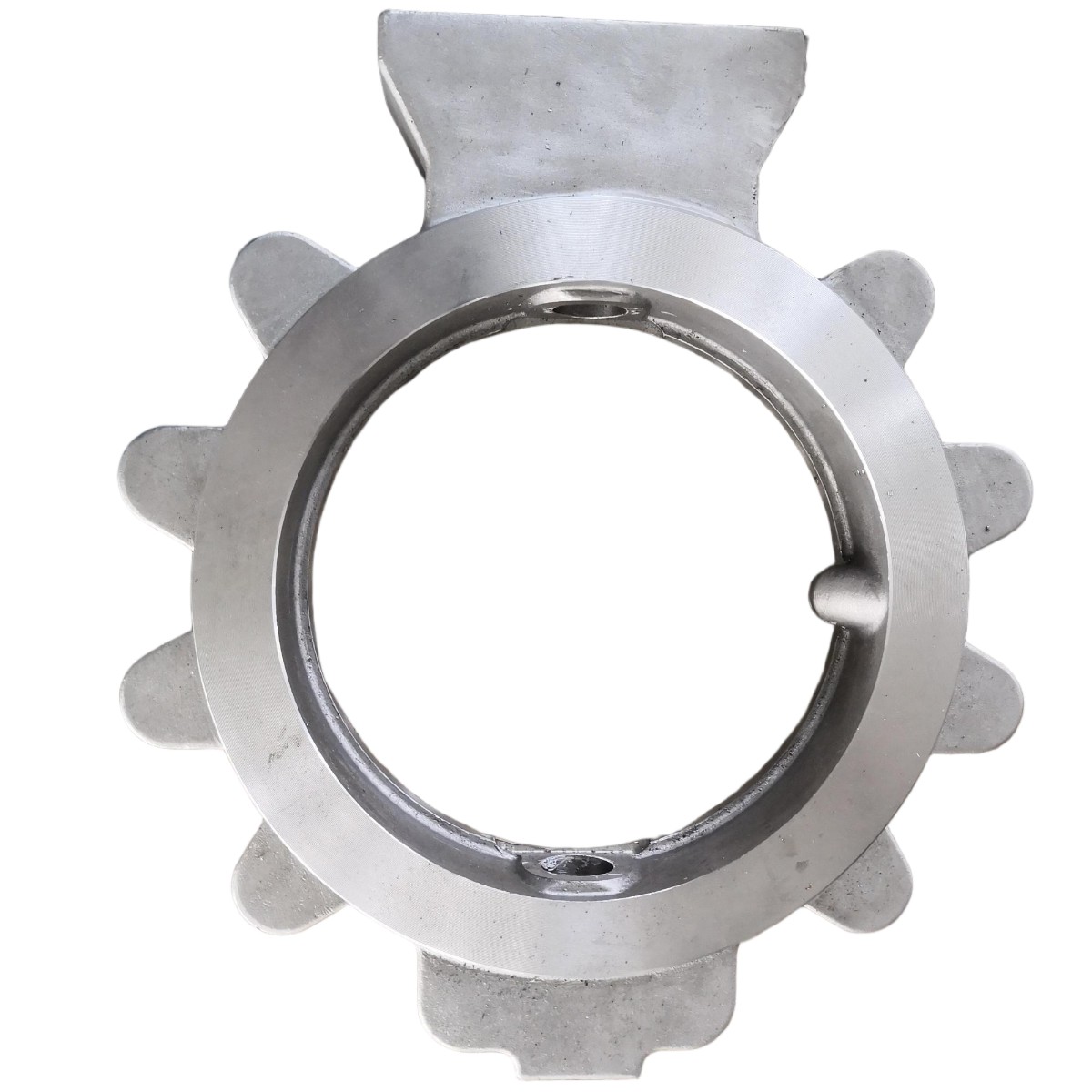
Table of Contents
- 1. Overview of Investment Casting Valve Plate
- 2. Manufacturing Process Explained Step by Step
- 3. Material Selection and Performance Requirements
- 4. Key Advantages of Investment Casting
- 5. Industrial Applications
- 6. Quality Control and Inspection Standards
- 7. Common Manufacturing Challenges
- 8. Investment Casting vs Other Methods
- 9. Frequently Asked Questions
1. Overview of Investment Casting Valve Plate
An investment casting valve plate is a precision-engineered component designed to regulate fluid flow in mechanical systems. It typically operates under high pressure, frequent cycling, and demanding sealing conditions. Unlike conventional machining methods, investment casting allows near-net-shape production, reducing material waste and improving dimensional accuracy.
In industries such as hydraulics and pneumatics, valve plates must maintain flatness, wear resistance, and corrosion resistance. Even minor deviations in geometry can lead to leakage, reduced efficiency, or system failure. This is why manufacturers increasingly rely on advanced casting techniques to ensure consistent quality.
2. Manufacturing Process Explained Step by Step
The investment casting process, also known as lost-wax casting, is a multi-stage precision manufacturing method. Each step contributes to the final dimensional accuracy and mechanical integrity of the valve plate.
- Wax Pattern Creation: A wax model of the valve plate is injected into a metal mold.
- Assembly of Wax Trees: Multiple wax patterns are assembled for batch production.
- Ceramic Shell Building: The wax assembly is repeatedly dipped into ceramic slurry and coated with refractory sand.
- De-waxing: The ceramic shell is heated, melting out the wax and leaving a hollow cavity.
- Metal Pouring: Molten metal is poured into the ceramic mold.
- Shell Removal: After cooling, the ceramic shell is broken away.
- Finishing and Machining: Final surface finishing and precision machining are applied.
This controlled process ensures excellent repeatability and tight tolerances, making it ideal for complex valve geometries.
3. Material Selection and Performance Requirements
Material selection plays a critical role in determining the performance of an investment casting valve plate. Common materials include stainless steel, carbon steel, and alloy steel.
| Material | Key Property | Typical Application |
|---|---|---|
| Stainless Steel (304/316) | Corrosion resistance | Hydraulic systems, marine equipment |
| Carbon Steel | High strength, cost-effective | General industrial machinery |
| Alloy Steel | Wear resistance, durability | High-pressure systems |
Selecting the correct material ensures that the valve plate performs reliably under temperature fluctuations, pressure loads, and corrosive environments.
4. Key Advantages of Investment Casting
Investment casting offers several advantages over traditional manufacturing methods, especially for complex valve components.
- High dimensional accuracy with minimal machining requirements
- Ability to produce complex internal geometries
- Excellent surface finish quality
- Reduced material waste and cost efficiency
- Consistent mechanical performance across production batches
These benefits make investment casting a preferred choice for high-performance valve plate manufacturing.
5. Industrial Applications
Investment casting valve plates are used across a wide range of industries where fluid control is essential.
- Hydraulic pumps and motors
- Air compressors
- Oil and gas equipment
- Automotive transmission systems
- Industrial machinery and automation systems
Their versatility and reliability make them indispensable in both heavy-duty and precision-engineered systems.
6. Quality Control and Inspection Standards
Quality assurance is essential in ensuring the reliability of valve plates. Manufacturers implement strict inspection procedures at every stage.
- Dimensional inspection using coordinate measuring machines (CMM)
- X-ray and non-destructive testing (NDT)
- Surface roughness analysis
- Pressure and sealing performance tests
At Gaomi Huading Precise Metals Co., Ltd., strict quality control systems are applied to ensure every investment casting valve plate meets industrial standards and customer expectations.
7. Common Manufacturing Challenges
Despite its advantages, investment casting presents certain challenges that must be carefully managed.
- Shell cracking during the de-waxing stage
- Porosity defects caused by improper metal pouring
- Dimensional shrinkage variations
- Surface inclusions or roughness inconsistencies
Advanced process control and experienced engineering teams are essential to minimizing these risks.
8. Investment Casting vs Other Methods
Understanding how investment casting compares with other manufacturing methods helps in selecting the right production technique.
| Method | Precision | Cost | Complexity Capability |
|---|---|---|---|
| Investment Casting | High | Medium | Excellent |
| Sand Casting | Medium | Low | Moderate |
| Forging | High | High | Low |
Investment casting offers the best balance between precision and design flexibility, making it ideal for valve plate production.
9. Frequently Asked Questions
Q1: Why is investment casting preferred for valve plates?
Because it provides high dimensional accuracy and allows complex geometries essential for sealing performance.
Q2: What is the lifespan of an investment casting valve plate?
It depends on material and working conditions, but typically ranges from several years to long-term industrial use under proper maintenance.
Q3: Can custom designs be produced?
Yes, investment casting supports highly customized designs based on specific engineering requirements.
Q4: How does surface quality affect performance?
A smoother surface reduces friction, improves sealing, and extends component lifespan.
Conclusion
The manufacturing of investment casting valve plates is a highly technical process requiring precision, material expertise, and strict quality control. From wax pattern creation to final inspection, every step directly influences product performance in demanding industrial environments. Choosing a reliable manufacturer ensures long-term operational stability and reduced maintenance costs.
Gaomi Huading Precise Metals Co., Ltd. specializes in producing high-quality investment casting valve plates tailored to industrial requirements, ensuring consistency, durability, and precision in every component.
If you are looking for dependable casting solutions, contact us today to discuss your requirements and receive professional support for your next project.